
Medication
Guidelines for Medication Use in SMS Patients
Individuals with Smith-Magenis syndrome may receive care from a range of healthcare professionals throughout their lives. SMS-associated concerns will differ among individuals, with deletions or RAI1 point mutations, and over time.

PRISMS Published Guidelines
SMS can be associated with physical, medical, psychological, and social challenges. The PRISMS Professional Advisory Board authored The Medical Management Guidelines to help families and clinicians anticipate and address medical and developmental needs.
Several management recommendations are foundational, particularly monitoring for/managing medical concerns. Proactive approaches should always be considered, including the management of diet, exercise (including outdoor activities), and therapeutic supports (e.g., music therapy, social connections, pet/equine, positive behavior supports). A primary healthcare provider may refer to specialists as indicated (pediatrician, developmental pediatrician, pediatric neurologist, geneticists, endocrinologist, gastroenterologist, psychiatrist). Interdisciplinary assessment and care is essential such as those supported through the PRISMS Clinic Research Consortium/ PCRC.
Addressing Challenging Behavior
When addressing common or complex challenging behaviors associated with SMS, there are guidelines created by leading experts to address these concerns. There may be environmental triggers, circumstances that cause alarm, or major life stresses that provoke or exacerbate behavior. Some stresses are common (sensory issues, communication impairments, transitions to/through/out of school, loss). When significant changes in emotions or behavior occur, referral to a specialist (such as a developmental pediatrician, neurologist, or psychiatrist) may be warranted.
Context is critical, including age/developmental stage, SMS-related factors (phenotypic sleep, cognitive, language impairments), health, environment, life stressors, and family history. The big idea is to treat specific problems specifically. Assess for the underlying reasons for challenging behavior. Address individual problems and treat with symptom or condition-specific approaches.
There has been considerable interest in psychotropic medications for emotional and behavioral problems. There is, however, no evidence base for particular psychotropic or psychiatric medications in people with SMS (except for interventions for sleep related problems). Medication may be considered for symptoms or problems that cause distress or dysfunction not helped by other approaches (attention deficit hyperactivity features, severe anxiety, mood disorder, obsessive compulsive disorder, rarely psychosis). Psychotropic medications have specific indications and cautions.
*There are no psychotropics that are recommended for preschool age children. Psychotropic agents have effects on the brain and body that can mask problems (medical symptoms, unmet support needs) or create new problems (side effects or drug interactions).
The Effects of Medication
Persons with SMS may experience less intensity of the issues listed above with the proper use of certain medications. Please refer to your child’s provider to address, monitor and prescribe any medication. Always alert your provider to any side effects or concerns when using any prescription or over-the-counter medication.


Common Symptoms & Medication Approaches
Sleep disturbances
-
- Circadian rhythm: begin with melatonin (≤3 mg) nightly 30-60 minutes before desired bedtime, coupled with behavioral sleep strategies. Consider melatonin analogues (Hetlioz). For SMS, dosing may be weight-based (lower doses, e.g., 0.5–5 mg in oral suspension) depending on age/weight.
- Combined use of nighttime melatonin and morning beta blockers (e.g., acebutolol) can help regulate circadian rhythm in SMS.
- Other trials may include nighttime Clonidine or Trazodone.
- Obstructive sleep apnea (OSA) requires specialist advice. Avoid nighttime sedation until OSA is addressed.
Constipation
-
- Increase fiber and fluid intake.
- OTC or prescribed laxatives as needed (e.g., Docusate, Magnesium, Lactulose, Polyethylene glycol).
- Always consult with a provider before long-term use.
Gastric reflux
-
- Diet with targeted medications to reduce stomach acid (e.g., H2 blockers such as cimetidine and famotidine, PPIs like omeprazole and lansoprazole).
- Avoid long-term Proton Pump Inhibitors/PPI use if possible, due to potential nutrient absorption issues and other potential long-term side effects.
- Monitor for digestive side effects including abdominal pain, bloating, nausea, diarrhea, and constipation.
Epilepsy/seizure disorder
Antiseizure medications (ASM) as indicated for seizure type (e.g., focal, generalized) and EEG (mixed focal + generalized features are common→ broad-spectrum agents preferred)
-
- Start low/go slow and monitor (heightened sensitivity to side effects).
- Certain ASM may be undesirable in SMS. Prioritize agents that do not worsen sleep disturbance, exacerbate behavioral dysregulation (impulsivity, aggression) or promote weight gain (Valproic acid)
- First-Line Options (commonly preferred; generally, better tolerated in SMS):
-
- Levetiracetam: broad-spectrum, easy dosing. May worsen irritability/behavior → monitor closely
- Lamotrigine: useful in focal/generalized seizures, favorable cognitive/behavioral profile, Slow titration required
- Valproic acid: effective broad-spectrum agent. Consider weight gain, sedation; monitor for endocrine/metabolic effects
- Second-Line /Adjunctive (add-on) options
- Topiramate: may help if obesity is a concern. Watch for cognitive slowing
- Clobazam: especially if sleep is fragmented. Risk of tolerance/sedation
Medications to use cautiously (may worsen core SMS features):
-
- Phenobarbital: can worsen cognition and behavior
- Benzodiazepines: emergency medication for prolonged seizure event. May cause disinhibition or paradoxical agitation (individual variability). Caution with chronic use (tolerance and withdrawal)
Special considerations in SMS
-
- Sleep–seizure interaction is critical
- Inverted melatonin rhythm can worsen seizure control
- Align ASD dosing with sleep cycle when possible (sedating doses at night)
- Behavioral comorbidity
- If aggression/self-injury is prominent, favor lamotrigine over levetiracetam
- Seizures may occur with onset of puberty: e.g., catamenial epilepsy is common in females coinciding with onset of menstrual cycle.
When to escalate
- Persistent seizures despite 2 appropriate medications:
- Consider epilepsy referral
- Video EEG to clarify semiology i.e. seizure type, focus, differentiate from non-epileptic events (common in SMS)
Attention deficit hyperactivity disorder/features
-
- Strategies and supports (always) with monitored trial of stimulant medication.
- Side effects (e.g., activation, suppressed appetite/overeating at night, insomnia).
- Non-stimulant alternatives may be considered (guanfacine or clonidine) with caution (effects on heart rate, blood pressure, constipation)
- Atomoxetine/Strattera is not recommended (adverse effects including sleep).
Anxiety and mood disorders/symptoms
-
- Address underlying reasons for symptoms, engage in therapy (developmentally appropriate behavior or psychotherapy, family support) before any monitored trial of antidepressant or anti-anxiety medication.
- Medications have specific indications, age ranges, side effects and monitoring guidelines for the general population, not specific to SMS.
- Females with SMS may demonstrate a premenstrual dysphoria/mood symptoms. Low-dose oral contraceptive may offer beneficial effects on mood and behavior symptoms as well as improving personal hygiene management because of decreased menstrual flow.
Aggression (associated with irritability)
-
- Doctors may suggest medication for irritability and impulsive behavior.
- Always address underlying reasons for agitation and aggression.
- Use medication guidelines (above), working closely with the prescriber.
- If antipsychotics are suggested, be aware of (ask about) common, interfering, and serious side effects (sedation, stiffness, restlessness, adverse muscle/movement effects, eating/weight gain/metabolic syndrome, required blood work).
- Anti-seizure medications like valproic acid, lamotrigine, oxcarbazepine, or topiramate may also be used with caution for potential side effects
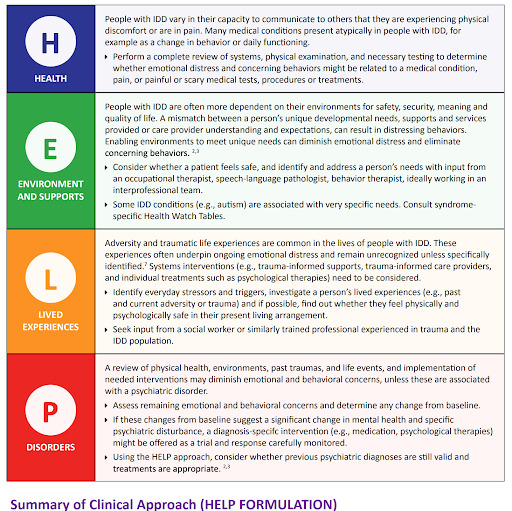
The HELP Formulation
A tool to help caregivers and others supporting SMS patients consider potential triggers or contibuting factors when an SMS patient exhibits emotional distress and behavioral concerns.
- Explore the four areas in the HELP approach in a systematic order, so that circumstances contributing to distressing behaviors are identified and addressed.
- Identify the most likely contributor(s) to the person’s distress and consider appropriate intervention(s).
- Be attentive and engaged with patients and family/support person perspectives as concerned are being sorted out.
- Adversity and trauma are ubiquitous in the lives of people with IDD. The impact of trauma is often unrecognized.
- Be attentive and engaged with patients and family/support person perspectives as concerned are being sorted out.
Living with SMS

BEHAVIOR

SPEECH & LANGUAGE

SLEEP

MEDICAL MANAGEMENT & TREATMENT

MEDICATION
